
This is one of the most common questions I hear from buyers looking anywhere in the Poconos, whether they’re focused on lake living, an amenity community, or quiet acreage tucked into the woods:
Is it smarter to buy land and build, or to purchase an existing home?
It’s a great question, but the answer isn’t one-size-fits-all. Across Wayne County and Pike County, I see buyers wrestling with this decision every week. Second-home buyers from New York and New Jersey, STR investors, and full-time relocators all come in with a version of the same assumption:
If I buy land, I’ll save money and get exactly what I want or which is cheaper.
You are considering the affordability, as you should.
My role is never to push a buyer toward one option. It’s to help them understand how this decision actually plays out here, with our zoning rules, septic requirements, construction costs, and township-by-township differences, so they can choose the path that fits their timeline, budget, and stress tolerance. There are layers. Then you decide what works for you.
The simple answer is this: For most buyers today, purchasing an existing home in the Poconos is more cost- and time-efficient than buying land and building. Read on for a deep dive.
What the Numbers Look Like Across Wayne and Pike Counties
When buyers compare land versus existing homes, they often focus on listing prices alone. There is more to this than a number.
Across Wayne and Pike Counties, existing homes currently trade in a wide range depending on location and amenities, but many livable, well-maintained properties sell better and depend on price in their own micro-market communities. Ready to sell home pricing tends to be more predictable, and homes often sell close to asking when they’re properly prepared.
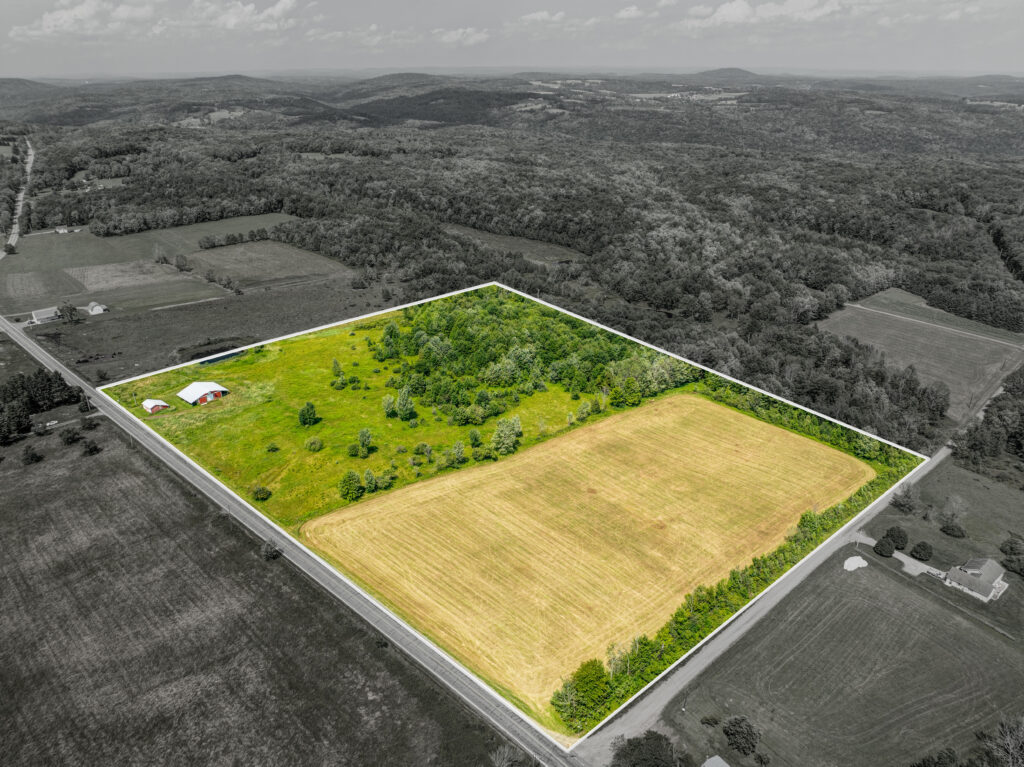
Vacant land, by contrast, is abundant, except in very dense communities and around Lake Wallenpaupack lakefront areas. Location to the lake raises the price of land, if you can find it.
Lake Wallenpaupack lake amenity communities lots go for higher than lots farther from the lake. There are just not as many. This is also true for some denser communities. Availability and location are a key factor here.
On paper, land can look like a bargain. The disconnect comes when buyers move from owning land to living on land.
In today’s Poconos market, realistic all-in numbers often look like this:
- Construction costs conservatively around $200+ per square foot as a starting point
- Utility connections and site work adding thousands more
- Septic design and permitting introducing both cost and uncertainty
- Soft costs and delays stretching timelines and material availability
It’s not uncommon for a modest new build, even a small cabin, to land north of $300,000 once everything is complete.
That’s why, for many buyers, existing homes end up being the more efficient path.
Buyer Psychology: Who Tends to Choose Land vs Existing Homes
This decision is just as emotional as it is financial. Over time, I’ve noticed two broad buyer mindsets emerge across Wayne and Pike Counties.
The “Custom Vision” Buyer
These buyers are drawn to land because they want control:
- Privacy and space
- Fewer neighbors
- The ability to design around hobbies, accessibility needs, or long-term plans
- A sense of permanence, a forever cabin or retreat
They’re usually comfortable with delayed gratification. What often catches them off guard is the number of variables they can’t control.
Perc tests don’t always pass.Rocky or steep lots complicate site work.Sand mound septic systems can add unexpected cost.Private road maintenance becomes their responsibility.
For buyers who are patient, well-capitalized, and emotionally prepared, land plus new construction can still be the right fit. But it’s rarely the easier path.
The “Ready-to-Use” Buyer
This group prioritizes:
- Being able to enjoy the home now
- Predictable monthly expenses
- Clear HOA and rental rules
- Fewer regulatory surprises
Many of these buyers are STR-curious or relocating full-time and want to understand how a property functions in the real world before committing. They often gravitate toward established homes in communities where expectations, costs, and rules are already known.
There’s also a quiet quality concern I hear often, buyers comparing newer construction to well-maintained older homes and choosing the one that feels more solid and proven.
Permits, Septic, and the Local Reality of Building
This is where hyper-local knowledge really matters.
New construction anywhere in Wayne or Pike County must comply with Pennsylvania’s Uniform Construction Code, along with township-specific requirements. That means engineered plans, multiple inspections, and adherence to modern building standards.
Septic is often the biggest wildcard.
Before a home can be built, soils evaluation and percolation testing must be completed through the local Sewage Enforcement Officer. If a lot fails, alternative systems like sand mounds or coconut systems may be required. That requires many level of township inspection, reports and more. It simply takes a LONG time.
Existing homes, particularly older ones, may have systems that were approved under previous regulations. While buyers still need to be thoughtful about condition and future upgrades, immediate usability has real value.
Short-term rental rules add another layer. Township ordinances vary widely across Pike and Wayne Counties, and many HOAs have their own regulations. CHECK ALL AT THE COMMUNITY, TOWNSHIP AND County LEVEL to operate under layered rules that buyers need to understand before making assumptions about rental income.
A Practical Decision Framework I Use With Clients
Here’s how I help buyers decide without emotion taking over.
If you want to be in a home within the next year and plan to finance most of the purchase, existing homes usually make more sense.
If you have a multi-year timeline, a financial cushion for overruns, and a very specific vision that existing inventory cannot meet, land plus a building may be worth exploring, but only after confirming zoning, septic feasibility, and access.
If STR income is central to your plan, start with municipalities and communities that clearly allow it, then compare existing STR-ready homes to the cost and uncertainty of licensing a new build.
If long-term appreciation and resale flexibility matter most, established homes in proven lake, golf, and amenity communities often offer more stability than brand-new construction where the new-build premium is already baked in.
What This Question Means for Sellers, Too
Homeowners sometimes worry that new construction nearby will pull buyers away. In reality, existing homes often hold their value well. New builds tend to absorb a premium when they’re new, then compete with future construction later.
Land owners face a different challenge. Carrying costs continue. Older lots may never have passed modern septic testing. Regulatory shifts create hesitation among buyers. Education and clarity often matter more than price alone.
Final Thoughts From Someone Who Lives and Works Here
There isn’t a universal answer to whether buying land or an existing home is “better” in the Poconos. There’s only what fits your goals, your timeline, and your tolerance for uncertainty.
Buying land can be deeply rewarding for the right buyer. Buying an existing home is often the calmer, faster, and more predictable path.
My role is to guide buyers and sellers through those tradeoffs with clarity, not pressure, so they’re making decisions they’ll still feel good about years down the road. But you have to do you!
If you want ongoing insight into how real estate actually works across Wayne and Pike Counties, not just one pocket or one trend, contact me directly at 215-272-1348 or follow along on Instagram, where I share the everyday realities of living and working here.
Your Move. My Mission. From first call to final key — guided every step of the way.