

The Top 5 Mistakes Second Homeowners Make When Selling in Pennsylvania — and What to Do Instead
There’s a moment I’ve seen more times than I can count. A seller comes to me with a property they’re ready to move on from — a second home at Lake Wallenpaupack they’ve loved for years — and somewhere in the first conversation it becomes clear that they’ve already made a decision based on an assumption that isn’t quite right. Not a careless assumption. Not a lazy one. Just one they were never given the information to correct.
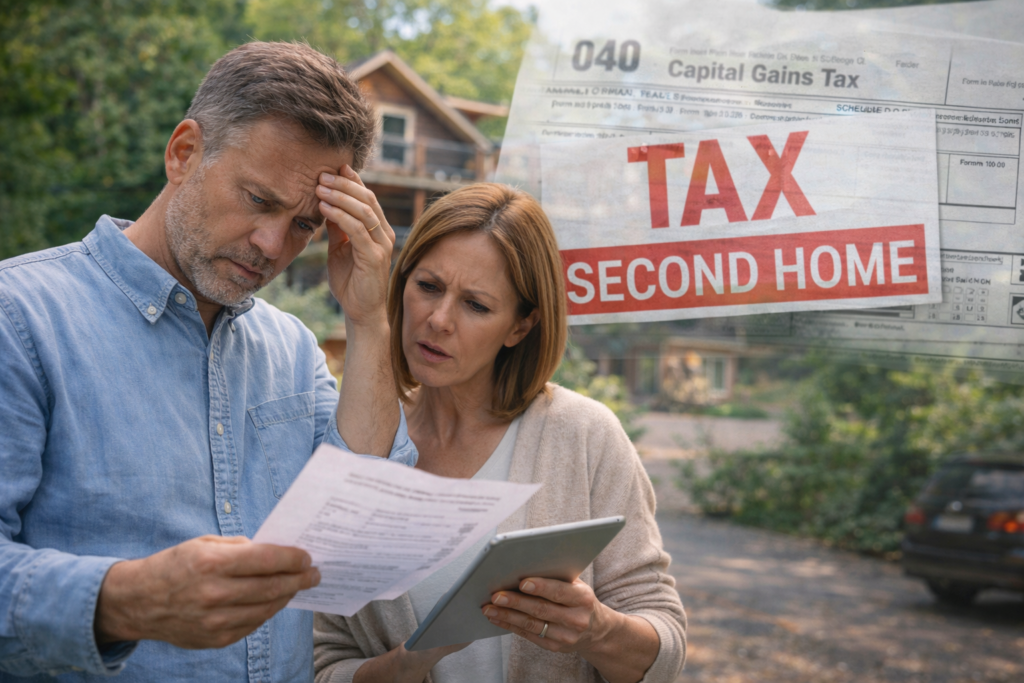
Selling a second home in Pennsylvania is not the same as selling a primary residence. The tax rules are different. The planning sequence is different. And the cost of getting it wrong isn’t abstract — it shows up in what you actually net at the closing table.
I’m Anne McCausland, and I’ve worked with second homeowners at Lake Wallenpaupack and throughout the Poconos for years. What follows are the five most consequential mistakes I see sellers make — and exactly what to do instead.
Mistake #1: Assuming the Primary Residence Exclusion Applies to You
This is the most common — and the most expensive — misconception in second home sales. Most homeowners have heard that you can sell your primary residence without paying tax on a large portion of the gain. That’s the Section 121 exclusion: up to $250,000 for a single filer, $500,000 for a married couple filing jointly, provided you’ve owned and lived in the home for at least two of the five years before the sale.
That exclusion does not apply to your second home.
It doesn’t matter how long you’ve owned it. It doesn’t matter how much you’ve improved it or how much you love it. If it wasn’t your primary residence for the required period, every dollar of gain is taxable. There is no equivalent exclusion in federal law for vacation homes, and Pennsylvania offers no state-level carve-out either.
“The exclusion that saves primary homeowners tens of thousands of dollars simply doesn’t exist for second homes — and most sellers don’t realize it until it’s too late to plan.”
What to do instead: Before you make any decision about selling, establish your actual tax exposure. That means understanding your adjusted cost basis, your projected sale price, and your income picture for the year you plan to close. None of those numbers can come from an assumption — they have to be calculated. Your CPA and I can work through that together before a listing agreement is ever signed.
Mistake #2: Not Knowing What Your Property Actually Cost You
Your taxable gain is not the difference between your sale price and what you paid. It’s the difference between your net sale proceeds and your adjusted cost basis — and your adjusted cost basis includes far more than your original purchase price.
Every documented capital improvement made since you bought the property can raise your basis. That dock you built. The addition you put on. The new roof after the storm. The HVAC system you replaced. Every one of those investments, properly documented, reduces your taxable gain dollar for dollar.
Sellers who don’t know this go into the sale with an inflated sense of what they owe. Sellers who know it but don’t have the documentation leave real money on the table anyway, because the IRS requires you to substantiate any basis claim.
What raises your adjusted cost basis:
- Capital improvements — additions, renovations, new roofing, HVAC replacement, dock construction, deck replacement
- Closing costs from the original purchase — title insurance, attorney fees, recording fees, survey costs
- Legal fees paid in connection with acquiring the property
What does not raise your basis:
- Routine maintenance — painting, landscaping, repairs that restore rather than improve
- Annual upkeep and seasonal service
What to do instead: Start pulling your improvement records now — before you call anyone about listing. Building permits, contractor invoices, receipts, inspection reports. If records are missing, county permit archives are often retrievable, and former contractors may have copies. Even partial documentation is better than none. This single exercise can reduce your tax bill by tens of thousands of dollars on a property with meaningful appreciation.
Mistake #3: Forgetting About Depreciation Recapture
This one surprises sellers who rented their Lake Wallenpaupack property — even briefly, even informally through Airbnb or VRBO.
If you claimed depreciation deductions on a rental property during any period of ownership, those deductions reduced your taxable income in the years they were taken. That was a real benefit. But at sale, the IRS recaptures every dollar of that depreciation at a 25% federal rate — separate from the long-term capital gains rate, and applied regardless of your income level.
Pennsylvania taxes the recapture as ordinary income at 3.07% as well. Sellers who took $40,000 in depreciation over five rental years face $10,000 in federal recapture tax at closing — on top of whatever capital gains tax applies to the rest of the gain.
The most common version of this mistake: a seller doesn’t remember that depreciation was claimed, because it was years ago and a different CPA handled it. The records still exist. The IRS will still expect the recapture.
What to do instead: Pull your federal tax returns from every year the property generated rental income. Look for Schedule E and the depreciation entries. Know the number before you list. If you can’t find the returns, your former CPA or the IRS transcript service can help reconstruct them. Knowing the recapture amount lets you model your true net proceeds accurately — and avoid an April surprise that no one planned for.
Mistake #4: Ignoring Pennsylvania’s Tax Rules — and Your Home State’s
Pennsylvania does not have a separate capital gains rate. The state taxes capital gains as ordinary income at a flat 3.07%. There is no exclusion for long-term ownership, no primary residence preference at the state level, and no mechanism that mirrors the federal treatment.
This applies to everyone who sells Pennsylvania property — not just Pennsylvania residents. If you live in New Jersey or New York and own a second home at Lake Wallenpaupack, you will owe Pennsylvania’s 3.07% on the gain from that sale. You’ll file a Pennsylvania non-resident income tax return for the year of the sale.
But it doesn’t stop there. Your home state may also have a claim on the gain.
New Jersey taxes capital gains as ordinary income at rates that can reach 10.75% for higher earners. A New Jersey resident selling a Pennsylvania second home will face both states’ tax obligations. New Jersey does provide a credit for taxes paid to Pennsylvania — but that credit rarely fully offsets the combined liability. The net result is often a meaningful additional state tax burden that sellers from the Philadelphia suburbs and the tri-state area never anticipated.
What to do instead: If you don’t live in Pennsylvania, you need a CPA who handles multi-state returns — not just your regular accountant. The interaction between Pennsylvania’s flat tax and your home state’s rate, combined with available credits, requires someone who does this regularly. Don’t assume the credit wipes out the obligation. Model the actual number.
Mistake #5: Treating the Sale Year as a Fixed Variable
When you close matters. Capital gains are recognized in the tax year the sale closes — and the rate applied to your gain depends on your total taxable income in that year, not just your ordinary income.
A retired seller with $90,000 in ordinary income might expect to be in the 15% long-term capital gains bracket. But if their Lake Wallenpaupack gain is $320,000, their total taxable income for the year becomes $410,000 — which, depending on filing status, can push them into the 20% bracket. The gain didn’t just get taxed; it changed which rate applied to the entire gain.
There is also the Net Investment Income Tax to consider. If your modified adjusted gross income exceeds $200,000 as a single filer or $250,000 as a married couple filing jointly, an additional 3.8% surtax applies to the gain. The combined federal rate at that level reaches 23.8% — before Pennsylvania’s 3.07% is added.
Sellers who have flexibility over closing timing — even a matter of weeks, pushing a December closing to January — can shift the gain into a different tax year with a materially different income picture. I’ve seen that single conversation save a seller a meaningful amount of money.
What to do instead: Before you decide on a listing timeline, sit down with your CPA and model your total income for two or three potential sale years. Look at where the brackets shift. Look at whether the NIIT threshold applies. If you have any flexibility in timing, understand the tax implications of each scenario before you commit to one.
The Full Picture: What Shapes Your Tax Liability When Selling a Poconos Second Home
| Factor | What It Means for You | Action to Take |
| No primary residence exclusion | Every dollar of gain is taxable — no federal or PA carve-out for second homes | Calculate your adjusted cost basis before listing |
| Long-term federal rate (0/15/20%) | Your rate depends on total income in the sale year — including the gain itself | Model projected income with CPA before setting a timeline |
| Net Investment Income Tax (3.8%) | Applies if modified AGI exceeds $200k (single) or $250k (married filing jointly) | Check whether the gain pushes you over the NIIT threshold |
| Pennsylvania flat tax (3.07%) | Applies to all sellers — residents and non-residents alike | File a PA non-resident return if you live out of state |
| Home-state tax (NJ, NY, etc.) | Your home state may also tax the gain — credit available but may not fully offset | Use a multi-state CPA to model combined exposure |
| Adjusted cost basis | Documented capital improvements reduce your taxable gain dollar for dollar | Pull improvement records now — permits, invoices, receipts |
| Depreciation recapture (25%) | Every dollar of depreciation ever claimed comes back at sale at 25% federal rate | Pull prior tax returns for all rental years; know the number |
| Sale year timing | Closing in a lower-income year can reduce your effective rate on the gain | Model 2–3 timing scenarios; don’t default to the first available window |
If the Gain Is Large: Two Deferral Strategies Worth Knowing
The 1031 Exchange
If your property qualifies as investment property — meaning it has documented rental income and investment intent — a 1031 exchange allows you to defer the entire capital gain by reinvesting proceeds into a like-kind replacement property. You must identify a replacement property within 45 days of closing and complete the exchange within 180 days. A qualified intermediary must hold the funds during the exchange period.
Personal-use vacation homes with no rental history typically do not qualify. But if your property has a meaningful rental history, this strategy can defer a six-figure tax bill indefinitely. The gain isn’t eliminated — it follows you into the replacement property — but deferral over decades of ownership has genuine economic value.
The Installment Sale
If a buyer is willing to carry seller financing, an installment sale spreads the gain recognition over multiple years. Each payment you receive contains a portion of the recognized gain, taxed in the year received. For sellers who will be in a lower income bracket in subsequent years — retirement being the most common scenario — this can meaningfully reduce the average effective rate on the gain.
Both strategies require qualified tax and legal counsel before any sale agreement is signed. For sellers facing gains of $200,000 or more, the deferral value is significant enough to justify the time and cost of the conversation.
The Sequence I Walk My Sellers Through Before We List
Capital gains planning isn’t something that happens after you’ve signed a listing agreement. It happens before — ideally weeks or months before. Here is the sequence that consistently produces the best outcomes for sellers in this market:
- Locate your original purchase documentation: closing disclosure, settlement statement, purchase contract.
- Compile all capital improvement records: permits, invoices, receipts organized by year and project.
- Pull any tax returns from rental years and identify depreciation claimed.
- Request a current market analysis from me — this gives your CPA the projected sale price they need.
- Sit down with your CPA: bring basis documentation, rental history, projected sale price, and your projected income for two or three potential sale years.
- Model the tax scenarios. Understand where the brackets shift and whether deferral strategies are worth pursuing.
- Come to the listing conversation with a clear picture of your net proceeds — not an estimate, a modeled number.
This sequence takes time. It should. A second home sale at Lake Wallenpaupack is often one of the largest financial transactions a seller will make in a given decade. The weeks spent preparing are not a delay. They are the preparation that makes the sale go well.
Frequently Asked Questions
What is the capital gains tax rate when I sell my second home at Lake Wallenpaupack?
At the federal level, long-term capital gains are taxed at 0%, 15%, or 20% depending on your total taxable income in the year of the sale. If your modified adjusted gross income exceeds $200,000 (single) or $250,000 (married filing jointly), an additional 3.8% Net Investment Income Tax applies. Pennsylvania taxes the full gain as ordinary income at a flat 3.07% rate. There is no exclusion at the state or federal level for second home sales.
I live in New Jersey. Do I still owe Pennsylvania tax when I sell my Poconos second home?
Yes. Pennsylvania taxes gains from Pennsylvania-situated property regardless of where the seller lives. As a non-resident, you’ll file a Pennsylvania non-resident return for the sale year and pay the 3.07% rate on the full gain. New Jersey will also have a claim on the gain, with a credit available for taxes paid to Pennsylvania — but that credit rarely fully eliminates the New Jersey obligation. A CPA who handles multi-state returns is essential here.
What qualifies as a capital improvement that can reduce my taxable gain?
Capital improvements are permanent additions or upgrades that add value, extend the property’s useful life, or adapt it to a new use. At Lake Wallenpaupack, this commonly includes dock construction and reconstruction, room additions, HVAC replacement, roof replacement, new decking, and structural renovations. Routine maintenance and repairs that restore rather than improve do not qualify. Documentation — permits, contractor invoices, receipts — is required to support any improvement added to your basis.
My property was on Airbnb for a few years. How does that affect my sale?
If you claimed depreciation deductions during the rental period — which most tax preparers will have done automatically — those deductions are subject to recapture at a 25% federal rate at the time of sale. This applies regardless of your income level and is calculated separately from your long-term capital gains rate. Pennsylvania taxes the recapture as ordinary income at 3.07%. Pull your tax returns from those years and calculate the total depreciation claimed before you set any expectations about net proceeds.
Should I talk to a real estate agent or a CPA first?
Both conversations are necessary, and they’re most productive when they happen together. Your CPA needs a realistic sale price to model your tax exposure — and that number comes from a real estate professional who knows the Lake Wallenpaupack market. I provide comparable sale data and a market analysis that sellers can take directly into their tax conversation. Reach out at yourmovemymissionpa.com and we can start there.
Resources
External Authority Resources
IRS Publication 523: Selling Your Home — Primary Residence Exclusion Rules
IRS Topic No. 409: Capital Gains and Losses
IRS: Like-Kind Exchanges Under IRC Section 1031
Pennsylvania Department of Revenue — Capital Gains and Losses
National Association of Realtors: Tax Information for Homeowners
Anne McCausland — Lake Wallenpaupack & Poconos Real Estate
yourmovemymissionpa.com — Lake Wallenpaupack Real Estate Expert
yourmovemymissionpa.com/blog — Real Estate Guidance for Second Homeowners
If you’re weighing a sale and want to understand what your property is worth in today’s market — and what that means for your actual financial picture — I’m here for that conversation. You can reach me at yourmovemymissionpa.com or on Instagram @annemccauslandrealtor. The right guidance at this stage costs you nothing. The wrong assumptions often do.