
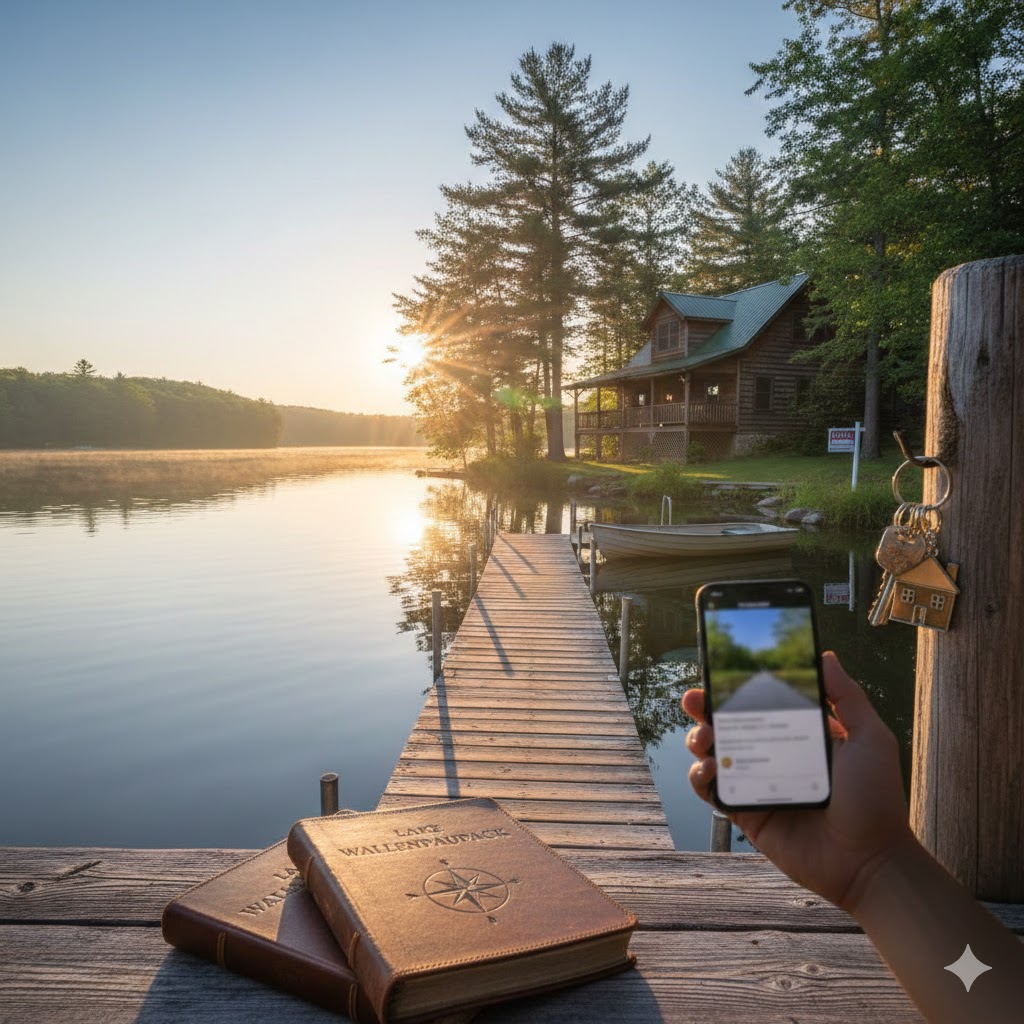
If you own a Lake Wallenpaupack property you’re no longer using, you already know the mental weight it carries. The property taxes that arrive like clockwork. The insurance premiums that keep climbing. The HOA dues. The lawn that needs cutting even when no one’s there to see it. The worry about pipes freezing, or worse, bursting while you’re two hundred miles away.
Maybe you bought it when your kids were young, dreaming of summer weekends on the water. Or you inherited it from parents who loved the Poconos, but your life has taken you in a different direction. Perhaps you thought you’d retire here, but your plans changed. Whatever brought you to this moment, you’re now facing a question many of my clients ask: How do I sell a house I don’t even live in?
I’m Anne McCausland, a REALTOR® with Keller Williams in Hawley, and I live at Lake Wallenpaupack full-time. A significant portion of my business comes from helping absentee owners sell vacation homes, inherited properties, and second homes they’re ready to let go of. In fact, more than 65% of my clients don’t live here year-round, which means I’ve built my entire approach around being your eyes, ears, and hands on the ground when you can’t be here yourself.
Let me walk you through what selling a vacant Lake Wallenpaupack home actually looks like, what it really costs to hold onto a property you’re not using, and how to make a remote sale feel manageable instead of overwhelming.
The True Cost of Keeping Your Property Empty
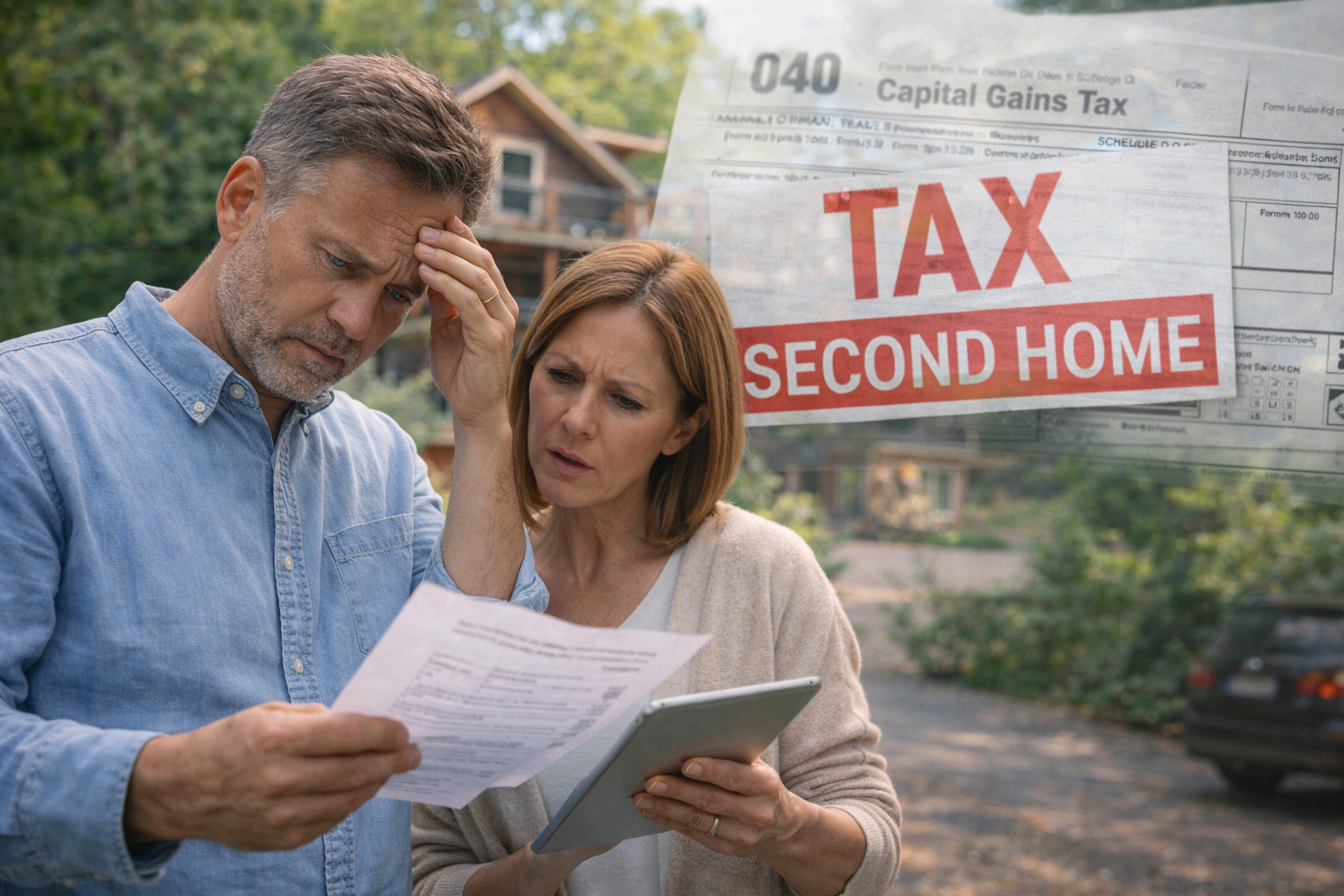
Before we talk about selling, let’s talk about what you’re actually spending to hold onto a vacant property in the Poconos. Most owners underestimate this number until they sit down and do the math.
Here’s what the typical vacant Lake Wallenpaupack home costs per year: (An Example – each home is unique)
Property taxes: Anywhere from $3,000 to $6,000 annually in Wayne and Pike Counties, and unlike your primary residence, there’s no homestead exemption to reduce that bill.
Vacant home insurance: Standard homeowner policies often won’t cover properties left empty for more than 30 to 60 days. Vacant property insurance runs 50% to 60% higher than regular coverage, meaning you’re looking at $2,100 to $2,300 per year instead of the usual $1,400.
Utilities: Even if you’re not living there, you need to keep the heat on through winter to prevent pipes from freezing. Add in water, electric, and occasional use, and you’re spending $1,200 to $3,600 annually just to keep systems functioning.
HOA dues: If your home is in a lake community like Wallenpaupack Lake Estates, Hideout, or another HOA neighborhood, those fees continue whether you use the amenities or not. Budget $600 to $4,800 per year depending on the community.
Lawn, snow, and maintenance: Someone has to mow the grass in summer and clear the driveway in winter, or you risk code violations and neighborhood complaints. That’s another $1,200 to $2,400 annually if you’re hiring it out.
Add it all up, and you’re looking at $8,000 to $19,000 per year just to own a house you’re not using. That’s before we even talk about the bigger expenses, like a new roof, a failed well pump, or septic issues you won’t discover until a neighbor calls to tell you there’s a problem.
I had a client last year who was paying nearly $1,500 a month to maintain a lakefront property he hadn’t visited in eighteen months. When he finally sat down and calculated what he was spending versus what the property had appreciated, the decision became obvious. He wasn’t holding an investment. He was funding a burden.
Why Vacant Properties in the Poconos Are Different
If you’ve ever tried to manage a property remotely, you know the challenges multiply in a rural lake market like ours. We’re not talking about a suburban home where you can call a neighbor or swing by on a Saturday. Lake Wallenpaupack properties come with unique considerations that make absentee ownership particularly complicated.
Winter is unforgiving here. Pennsylvania winters aren’t like the mild cold you might experience in parts of the mid-Atlantic. We get extended freezes, heavy snow, ice dams, and conditions that can destroy a home if it’s not properly maintained. I’ve seen burst pipes cause thousands in water damage because a heating system failed and no one knew for three days.
You’re dealing with well water, septic systems, and private roads. Many Lake Wallenpaupack homes aren’t on municipal water or sewer, which means systems require more attention. Wells can freeze, septic tanks need pumping, and private roads may not get plowed unless you’re paying someone to do it. For buyers coming from urban areas, these are already concerns. For sellers managing remotely, they’re logistical nightmares.
The lake adds another layer of complexity. If your property has dock rights or sits on Brookfield-managed shoreline, there are regulations, permit requirements, and seasonal considerations that affect everything from showing the home to transferring ownership. Buyers want to understand lake access, water levels, Brookfield’s project line rules, and whether your dock is grandfathered or permitted. Those aren’t questions you can answer from an online listing description. If you live in an HOA, your rules and regulations should cover this layer.
This is where living here full-time makes all the difference. I know which communities allow short-term rentals and which don’t. I know the difference between lakefront and lake-view pricing. I know which contractors show up when they say they will, and I know how to get properties ready for market even when the seller hasn’t been here in months.
The Two Paths for Selling a Vacant Lake Wallenpaupack Home
When clients come to me with a vacant property they’re ready to sell, we talk through two main approaches. Which one makes sense depends on your timeline, your budget, and your tolerance for managing a process from a distance.
Path One: The Traditional Sale with Hands-On Support
This is the route we take when the property is in decent shape, the seller can invest a bit in preparation, and we have time to properly market the home to get close to full market value. The goal is to maximize your proceeds while minimizing the stress of managing everything remotely.
Here’s what that process looks like with me as your agent:
I coordinate everything on the ground. We start with a video walkthrough so I can show you the property’s current condition and we can discuss what needs attention. Then I arrange contractors, cleaners, landscapers, and anyone else needed to get the home market-ready. You don’t have to call around for estimates or manage schedules. I handle that, and I’m there to meet workers, verify quality, and make sure the job gets done right.
I price your home based on real market data, not hope. I’ve closed over 100 transactions in this market, including seven lakefront properties on either the buyer or seller side. I know what Lake Wallenpaupack homes actually sell for, not what sellers wish they’d sell for. My job is to give you honest pricing strategy so your home moves instead of sitting. I give realistic values based on data driven statistics and your home’s unique qualities.
I manage showings, provide feedback, and keep you informed. Because the property is vacant, we can use a lockbox and allow flexible showing times, which is actually an advantage. I monitor every showing, collect feedback from buyer agents, and adjust our approach if needed. You’ll always know what’s happening and why.
We close remotely. Pennsylvania allows remote online notarization, which means you can sign documents from wherever you are. No need to drive back to the Poconos for closing. I coordinate the entire process so it’s seamless.
This path works well when you want to achieve near-market value and you’re willing to give the process 60 to 90 days. This is based on the average days on market. I have had homes recently sell in less than a week if an area is in high demand and there is little competition. It’s also the right fit if your property is in a desirable location or condition where investing in preparation will clearly pay off.
Path Two: The Fast Cash Sale
Sometimes, though, the property needs too much work, the seller doesn’t have the bandwidth to manage repairs from a distance, or there’s a financial urgency that makes speed more important than squeezing out every dollar.
In those situations, I help clients evaluate cash buyer offers. Cash buyers purchase homes as-is, meaning you don’t fix anything, you don’t stage anything, and you don’t wait months for the right buyer to come along. The trade-off is that cash offers typically come in at 70% to 85% of market value for properties needing significant work, or 85% to 95% for homes in decent condition.
I don’t push clients toward cash sales, but I do present the option honestly. If you’re spending $1,500 a month on a vacant property and it’s going to take $25,000 in repairs to make it market-ready, a cash offer that closes in two weeks might net you more than a traditional sale six months from now after you’ve paid carrying costs and repair bills.
My role is to help you see the full picture so you can make the decision that actually serves your situation, not just the one that sounds best on paper.
What Makes Selling Remotely Work
Whether we go the traditional route or explore cash options, the key to a successful remote sale is having someone local who genuinely understands the market and treats your property like it matters.
I check on homes between showings. I verify that lawn crews actually showed up or the driveway is plowed. I meet inspectors and appraisers so you don’t have to coordinate access from three states away. I communicate clearly and consistently so you never feel like you’re guessing what’s happening.
This isn’t something I do because it’s required. It’s how I built my business. More than 65% of my clients are referrals or repeat business, and many of those are absentee owners who trusted me with a property they couldn’t manage themselves. When someone refers their friend or family member to me, it’s because they felt supported, not sold to.
A Few Recent Examples
Last year, I worked with a son in New Jersey who inherited a home from his mom. He hadn’t been to the property in over a year, and honestly, they had no idea where to start. We did a FaceTime walkthrough, I arranged an estate sale company for the personal belongings, coordinated cleanout and basic repairs (painted some walls, replaced some carpet) and had the home listed within five weeks. It went under contract or went pending in 4 and sold in 28 days, and he never had to make the drive and still went on his planned vacation in the middle of the sale.
Another client was a New York City executive who bought a Lake Wallenpaupack retreat during COVID with big plans to use it every weekend. Life got busy. The commute felt longer. The maintenance felt harder. By the time he called me, he’d been paying $18,000 a year for a home he visited twice. We listed it in early fall, priced it competitively, and closed before the holidays. He told me the relief he felt the day we closed was worth more than maximizing every dollar.
These aren’t unique stories. This is the reality for many Lake Wallenpaupack owners who bought with the best intentions but realized the property didn’t fit their life anymore.
What Happens Next
If you’re holding onto a vacant Lake Wallenpaupack property and you’re not sure what to do, the first step is just an honest conversation. No pressure, no sales pitch, just a clear-eyed look at what your property is worth, what it would take to sell it, and whether holding onto it still makes sense.
You can reach me through my website at yourmovemymissionpa.com or my cell phone for fastest response.
I’ve been doing this since 2018, and I’ve lived at Lake Wallenpaupack since 2020. I’m not just an agent who works here. I live here, I boat here, I live the lake life, and I understand what makes this place special. I also understand when it’s time to let go.
Your move. My mission. Let’s figure out what makes sense for you.