

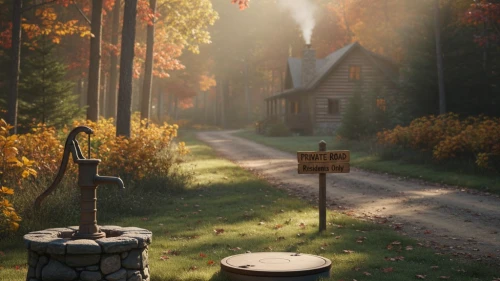
The systems you don’t see during a showing, but live with long after closing
Wells, Septics, and Private Roads in Lake Ariel, Lake Wallenpaupack, and Wayne County
The systems you don’t see during a showing, but live with long after closing…
Whether you’re buying or selling a home in Lake Ariel, Lake Wallenpaupack, or anywhere across Wayne County, there are three things that rarely get much attention during a showing, yet quietly shape the entire transaction and ownership experience.
Wells. Septic systems. Private roads.
They don’t show up in listing photos. They’re rarely the reason someone schedules a showing. But they directly affect financing approval, inspection outcomes, long-term costs, and how confidently a buyer moves forward.
As a full-time REALTOR® and year-round resident, I see these three issues influence more deals, negotiations, and buyer decisions than most cosmetic updates ever will. This is true for first-time buyers, second-home buyers, long-time owners, and sellers preparing to list.
This is not about fear or worst-case scenarios. It’s about understanding how these systems really function in our area, and why clarity around them protects both value and peace of mind.
Why wells, septics, and private roads are normal here…
Outside of communities with central utilities, like The Hideout or a handful of lakefront pockets, most of Lake Ariel, Lake Wallenpaupack, and rural Wayne County rely on private wells, on-lot septic systems, and privately maintained roads.
That’s not a red flag. It’s simply how this region developed.
Many of the properties buyers love most, cabins, lake-rights homes, wooded parcels, non-HOA neighborhoods, were built long before public sewer, water, or township-maintained roads were realistic options.
The systems themselves are common. What’s uncommon is how familiar most buyers are with them.
How buyers experience these systems emotionally……
Most buyers entering this market are coming from New York, New Jersey, or the Philadelphia area. They are drawn to privacy, nature, water access, and a slower pace, but they are also stepping into a type of homeownership they may never have experienced before.
What I hear most often sounds like this:
- “What if the septic fails?”
- “What if the well can’t handle guests?”
- “What happens in winter on a private road?”
- “What if something breaks when we’re not here?”
These concerns are reasonable. They’re not about the systems themselves, they’re about uncertainty. Buyers want to know what they’re responsible for, what’s predictable, and what could become a financial surprise.
When buyers don’t get those answers early, hesitation shows up later, often during inspection or underwriting.
What sellers often underestimate
Sellers, especially long-time owners, are sometimes caught off guard by how much attention buyers now pay to these systems.
“We never had an issue.” “It’s always worked fine.” “We’ve owned it for years.”
Those statements can be true and still not be enough.
In today’s market, buyers are more selective and more cautious. They want documentation, recent service history, and a clear understanding of what they’re inheriting. When that information isn’t available, buyers often assume the worst, even when no problem actually exists.
What many sellers don’t realize is that:
- A recent septic pump and inspection can prevent renegotiation
- Well service records reduce buyer anxiety
- Clear road access information avoids financing delays
- Proactive maintenance often costs less than buyer credits later
These systems may be underground, but they carry very real weight during negotiations.
Septic systems in the Poconos, what matters long term….
In Pennsylvania, on-lot septic systems are regulated under Act 537, with additional county oversight. Many three-bedroom homes are designed around a 900-gallon tank, though older systems vary in size and layout.
What both buyers and sellers should understand:
- A well-maintained septic system can last 20 to 40 years or longer
- Neglect is the biggest cause of early failure
- Wayne County’s soil conditions and winter freezes make routine care especially important
Maintenance timing:
- Professional inspection every 1 to 3 years
- Pumping every 3 to 5 years, depending on household size and water usage
Typical cost ranges:
- Inspection and dye testing usually run a few hundred dollars
- Pumping is generally several hundred dollars
- Replacement, if required, can reach into the tens of thousands, depending on site conditions
From a buyer perspective, knowing the age and condition allows realistic budgeting. From a seller perspective, having recent records removes uncertainty and builds trust.
Wells and water systems, ownership over time…
Private wells are standard throughout Lake Ariel and the Poconos, particularly in older or rural homes. Many systems are reliable, but like any mechanical setup, they require attention over time.
What buyers should expect:
- Standard water testing for bacteria and nitrates
- Possible mineral content that requires treatment systems
- Evaluation of pump age, pressure tank condition, and recovery rate
- Additional scrutiny for homes with heavy or seasonal use
Maintenance timing and cost considerations:
- Water testing annually or every few years
- Pumps often last 10 to 15 years
- Pressure tanks and switches may need replacement over time
- Treatment systems require routine filter or component changes
Well ownership isn’t complicated, but it does require awareness. Sellers who can explain their system clearly and buyers who understand long-term care tend to have far smoother transactions.
Private roads, access, and why documentation matters
Private roads have historically caused financing complications when no recorded maintenance agreement existed. Lenders want to confirm that a property has legal access and that the road will be maintained in a reasonable, predictable way.
Recent updates to Pennsylvania’s Private Road Act, including Act 75, created a statutory minimum maintenance framework that helps many homes qualify for financing even when a formal agreement is not recorded.
That legal change has helped closings move forward, but it does not eliminate buyer concerns.
Buyers still want to know:
- Who plows and grades the road
- How costs are shared
- What happens when someone doesn’t participate
Sellers who can explain these details clearly reduce friction, delays, and last-minute stress.
A realistic ownership and maintenance timeline:
For homeowners, managing these systems does not mean constant work. It means periodic, intentional attention.
Year one:
- Locate and map septic and well components
- Organize permits, service records, and invoices
- Understand road responsibilities
Every 1-3 Years:
- Septic inspection
- Water testing
- Review road condition and drainage
Every three to five years:
- Septic pumping
- Reassess grading and runoff control
Ongoing habits:
- Manage water usage thoughtfully
- Keep vehicles and structures off drainfields
- Communicate with neighbors about road upkeep
- Keep records in one place for future buyers
These habits quietly protect value and make resale far smoother when the time comes.
Why this matters more now
In a market where buyers have more choices and less urgency, uncertainty becomes leverage.
Homes with clear system histories, documented maintenance, and predictable access tend to:
- Move through inspections with fewer surprises
- Appraise more cleanly
- Hold value better than similar homes with unanswered questions
This applies whether the home is a lakefront retreat, a weekend cabin, or a full-time residence.
Understanding wells, septics, and private roads is not about avoiding certain homes. It’s about owning, buying, or selling with clarity instead of assumptions.
If you want more grounded, local insight like this, you can explore additional resources at annemccausland.kw.com or follow along on Instagram at @annemccauslandrealtor, where I share what actually matters in Lake Ariel, Lake Wallenpaupack, and across the Poconos, without pressure or fluff.
Selling Beautiful Sunsets, guided with care every step of the way.
YOUR MOVE. MY MISSION.